Climate Change and Wildlife Conservation
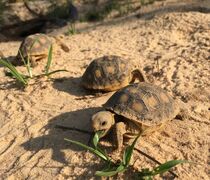
Climate change impacts to Gopherus tortoises
We are investigating how climate change will influence gopher tortoise populations with a specific aim to estimate which demographic rates will be affected by a changing climate. Results will inform management and translocation practices.
Students: Nicole DeSha, Garrett Lawson
Collaborators: Kevin Loope, and Dave Rostal (Georgia Southern University), Kevin Shoemaker and Margarete Walden (University of Nevada, Reno), Matt Aresco (Nokuse Plantation), Lora Smith (Jones Center), Betsie Rothermel (Archbold Biological Station), Mike Legare (Merritt Island National Wildlife Refuge)
We are investigating how climate change will influence gopher tortoise populations with a specific aim to estimate which demographic rates will be affected by a changing climate. Results will inform management and translocation practices.
Students: Nicole DeSha, Garrett Lawson
Collaborators: Kevin Loope, and Dave Rostal (Georgia Southern University), Kevin Shoemaker and Margarete Walden (University of Nevada, Reno), Matt Aresco (Nokuse Plantation), Lora Smith (Jones Center), Betsie Rothermel (Archbold Biological Station), Mike Legare (Merritt Island National Wildlife Refuge)
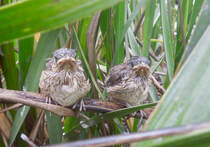
Sea level rise and saltmarsh birds
Species that inhabit coastal ecosystems are particularly vulnerable to climate change - habitats will likely be "squeezed" between rising sea levels and increasing coastal development in the coming decades. We are studying how to conserve saltmarsh bird species that are experiencing this coastal squeeze.
Students: Corina Newsome, Bridget Re
Collaborators: Ashley Dayer (VT), Ruth Boettcher (VA DWR), Todd Schneider (GA DNR)
Species that inhabit coastal ecosystems are particularly vulnerable to climate change - habitats will likely be "squeezed" between rising sea levels and increasing coastal development in the coming decades. We are studying how to conserve saltmarsh bird species that are experiencing this coastal squeeze.
Students: Corina Newsome, Bridget Re
Collaborators: Ashley Dayer (VT), Ruth Boettcher (VA DWR), Todd Schneider (GA DNR)
Habitat Management and Species Restoration
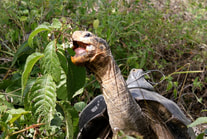
Giant tortoise conservation and ecosystem restoration
We collaborate closely with the Galapagos National Park and the Galapagos Conservancy’s Giant Tortoise Restoration Initiative to provide scientific input to their tortoise conservation and management decisions.
Collaborators: James Gibbs (SUNY-ESF), Linda Cayot (Galapagos Conservancy), Wacho Tapia (Galapagos Conservancy)
We collaborate closely with the Galapagos National Park and the Galapagos Conservancy’s Giant Tortoise Restoration Initiative to provide scientific input to their tortoise conservation and management decisions.
Collaborators: James Gibbs (SUNY-ESF), Linda Cayot (Galapagos Conservancy), Wacho Tapia (Galapagos Conservancy)
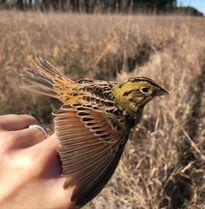
Predicting habitat use in early successional habitats
We are assessing early successional bird habitat selection to inform single species and multi-species management practices such as prescribed burning.
Students: Abbie Dwire, Cory Allred
Collaborators: Todd Schneider (GA DNR), Carolyn Johnson (USFWS)
We are assessing early successional bird habitat selection to inform single species and multi-species management practices such as prescribed burning.
Students: Abbie Dwire, Cory Allred
Collaborators: Todd Schneider (GA DNR), Carolyn Johnson (USFWS)
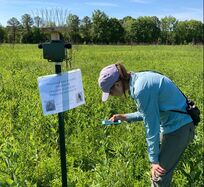
Acoustic monitoring to inform grassland bird management
We are using automated recording units (ARUs) and machine learning algorithms to automatically identify bird species from their songs to monitor grassland birds.
Students: Dan Watson
Collaborators: Lauren Cruz (USFWS), Jim Renner (Chemours Company), Jay Howell (VA DWR), Mark Ford (USGS/VT)
We are using automated recording units (ARUs) and machine learning algorithms to automatically identify bird species from their songs to monitor grassland birds.
Students: Dan Watson
Collaborators: Lauren Cruz (USFWS), Jim Renner (Chemours Company), Jay Howell (VA DWR), Mark Ford (USGS/VT)
